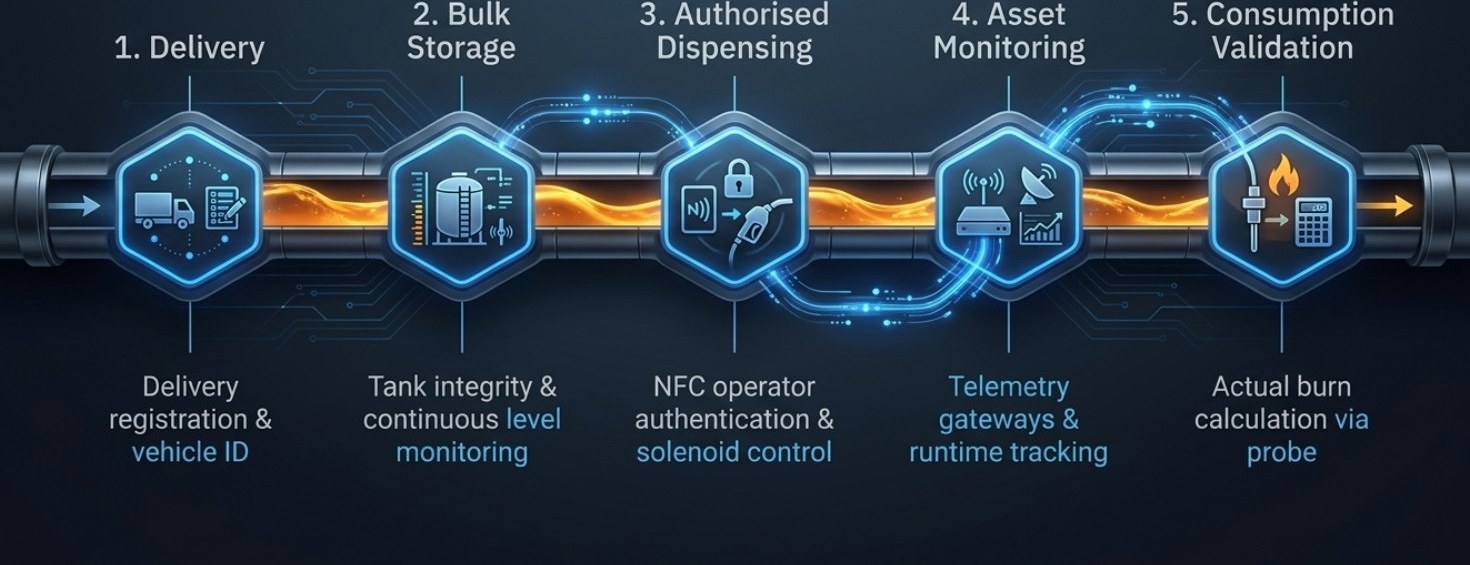
Delivery puts certified diesel on site. IoT follows it until it is burned. The two meet when the volume poured is matched to the volume the probe received.
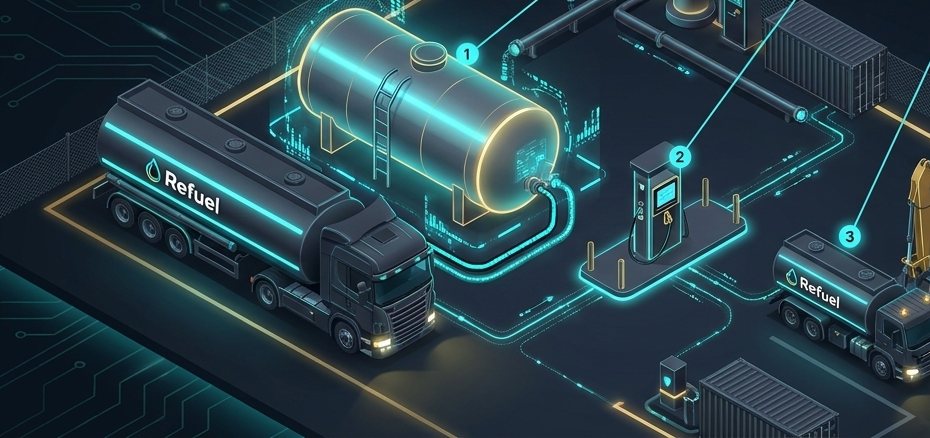
Calibrated probes give real-time telemetry on your tanks.
Low stock is read from the actual burn rate. Orders can also be placed by hand.
Volume and delivery date are confirmed. For generators, that order can be filled by Refuel Delivery on site.
Diesel is dispensed through the app, NFC-authorised, into the tank or the asset.
The truck’s pour and the probe’s receipt are both on the record. Variances are flagged. The result is an electronic proof of delivery, with a timestamp.
Claims built on manual logbooks and estimates are the ones that fail. Session-based reporting tracks fuel level and run hours for the task, and separates eligible primary work from use that does not qualify. Mining, agriculture, forestry, fishing and energy are the sectors named. Qualifying still depends on registration.