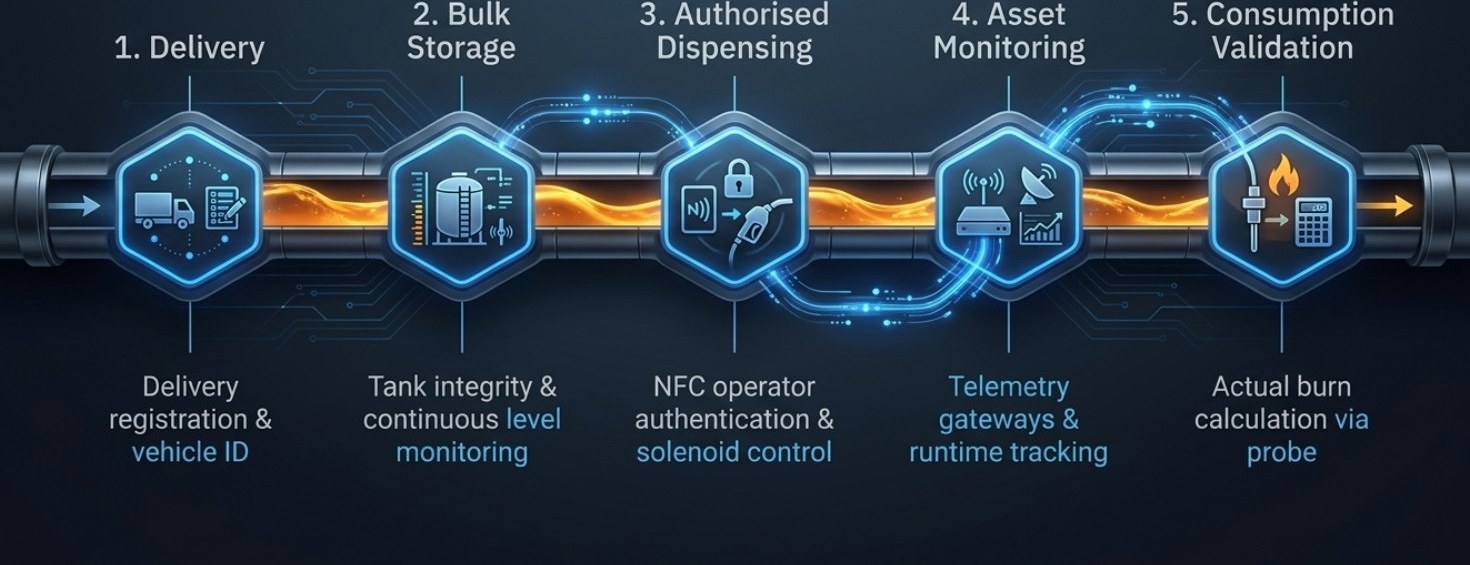
You know what enters the bulk tank. Refuel IoT is built for the question after that: where it goes. Fuel stops being a managed commodity and becomes operational intelligence you can trust.
Four places the old way still guesses, and what replaces each one.
| The traditional method | The Refuel IoT method | |
|---|---|---|
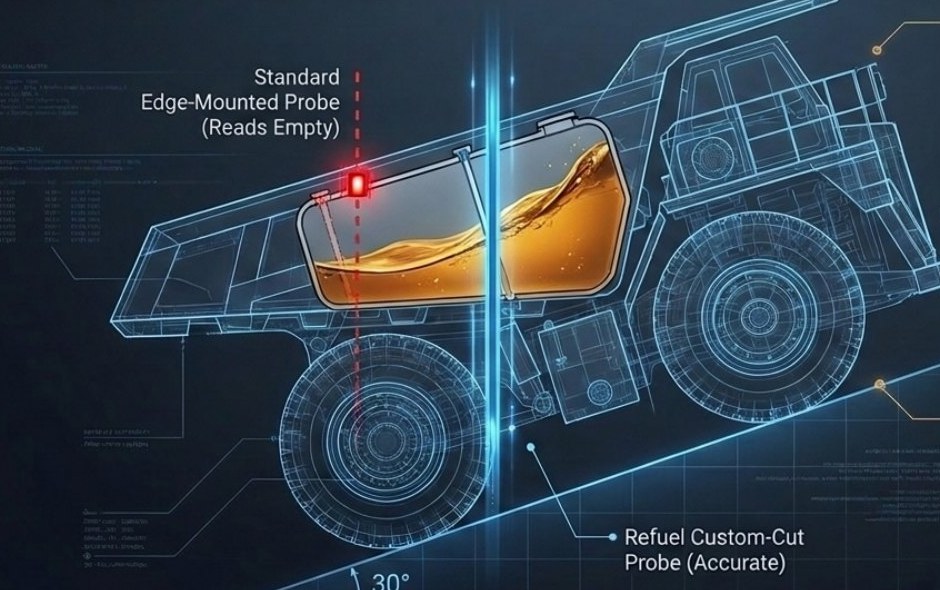
| Visibility | Bulk-tank visibility only. Blind to the asset. | Asset-level visibility via custom-installed probes. |
| Dispensing | Paper logs, clipboards, and manual data entry. | NFC-authenticated, locked, and fully digital dispensing. |
| Loss discovery | Reactive discovery during month-end reconciliation. | Automated, real-time exception alerts and anomaly detection. |
| Compliance | Estimated rebate claims, prone to rejection. | Audit-ready, mathematically proven compliance records. |
Heavy industries lose an estimated 5% of fuel to shrinkage and inefficiency. Automated correlation recovers this lost capital instantly.
Manual logs result in rejected tax rebates. Audit-ready, asset-specific digital records maximise qualifying claims, often pushing qualification to 72–80%.
The combined savings from eliminated wastage and maximised rebates vastly outperform system CapEx and OpEx, with net-positive cash flow from year 1.
A real-time dashboard for levels, consumption and reports. A cloud layer for storage, processing and access.
Under that, the bridge: Bluetooth, Wi-Fi and GSM, with rugged gateways and offline sync. Most systems stop at one radio. Wi-Fi is the third path, which is what makes this tri-layer distinct. MHSA-compliant, intrinsically safe options are available for hazardous environments.
Traditional systems know what left the pump. Refuel correlates the volume authorised at the nozzle with the volume received in that machine’s tank.
A matched pour and receive is the whole point. Shrinkage, ghost transactions and manual reconciliation are what that match is there to end.
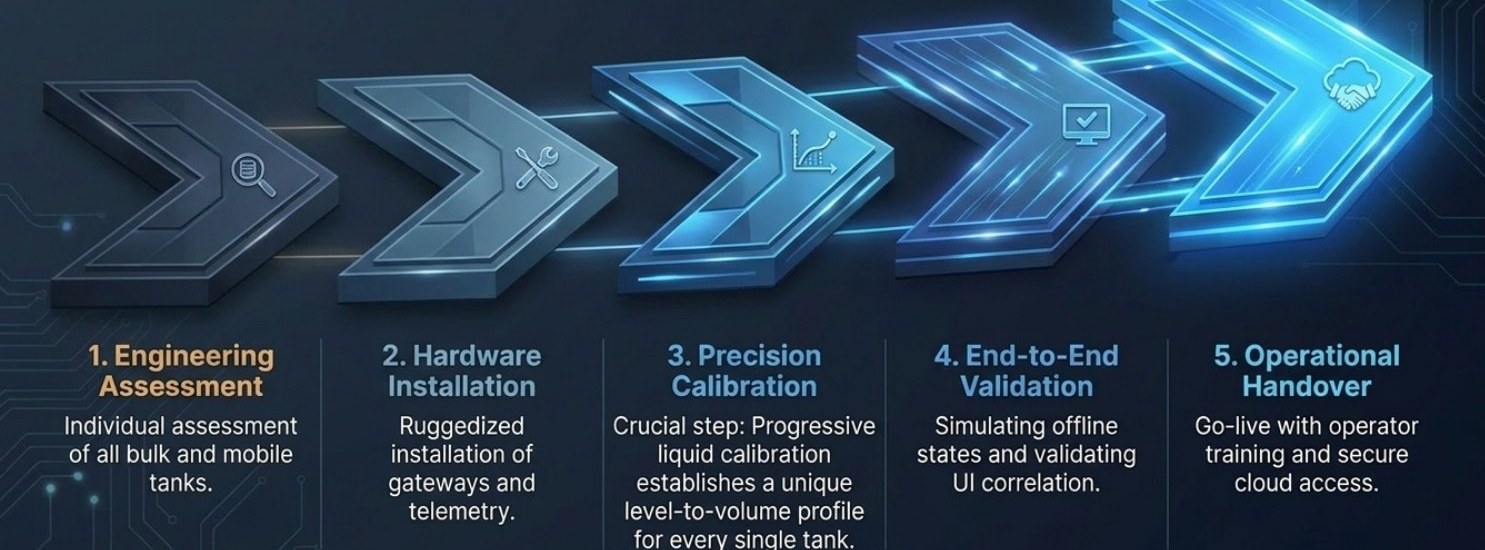
Is your fuel data truly data you can trust?